
Joint activity training operation procedures and evaluation standards
The core logic of joint mobility training is to "first conduct personalized adaptation assessment, then perform training actions in stages, and finally make an evaluation based on actual functional improvement." There is no unified operating template suitable for all scenarios. The operational differences between the two mainstream schools of passive training and active training in the current rehabilitation field are essentially due to different injury stages and different functional bases of the population. There is no need to force a distinction.
Oh, yes, I came across a typical example last week: a little girl who was 3 weeks after her anterior cruciate ligament surgery was forced to have a hematoma on her knee by her family at home. When she was sent to the outpatient clinic, she cried so much that she read online tutorials and said that the temperature should be raised to 90 degrees as soon as possible after the surgery, so her family members followed suit. Do you think this can be blamed on the tutorial? In the final analysis, I don't know which operation is suitable for my situation, so I just copy the standard and it's strange that no problems occur.
Let’s talk about the red line in practice first. No matter which school, as long as the fracture is not completely healed, there is active bleeding in the joint cavity, or the acute inflammatory stage (such as gout attack, acute rheumatoid stage), joint mobility training is absolutely not allowed. This is a hard rule written into the global rehabilitation guidelines, and there is nothing controversial about it.
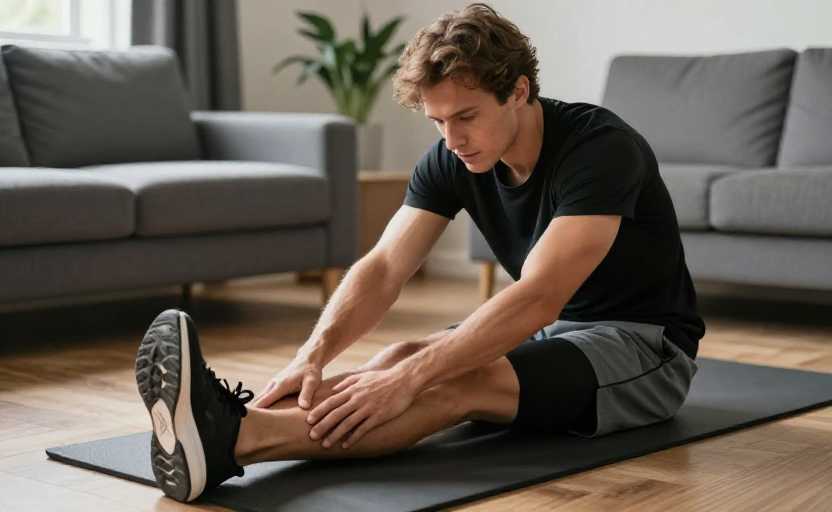
As for the specific operation, the passive training commonly used in clinical schools is mainly efficient and suitable for people who are bedridden, have complete muscle weakness in the early stage after surgery, and are unable to actively move on their own. When I teach novice rehabilitation therapists, my first requirement is that the proximal joints must be fixed before performing passive operations. For example, when bending the knee joint, the ilium must be pressed firmly on the operating bed, and the patient must not be allowed to shake the pelvis to compensate. Otherwise, the range of motion gained will be false, and he will be back after taking two steps. When moving, the intensity should be steady. Stop at the position where the patient feels a slight pulling sensation and no sharp sting. Just hold it for 30 to 45 seconds. Don't pursue "the more painful, the more effective". When the pain reaches a VAS score of 3 or above (probably so painful that you can't help but frown and cannot speak normally), you have to loosen it. Otherwise, it will easily break the soft tissue and leave scars and adhesions.
Active training, which is more highly recommended in the sports rehabilitation circle, is based on the logic that "the range of motion controlled by muscles is useful." It is suitable for people with acceptable functional foundations, such as limited shoulder and neck movement caused by sitting for a long time, and limited hip joint movement during the recovery period of lumbar protrusion. Last time, a programmer from an Internet company came to me and said that he had been practicing shoulder opening in the gym for half a month. The range of shoulder mobility had increased, but it hurt when he raised his hand. When I looked at his movements, he just shook his arm and had no strength at all in the rotator cuff muscles and serratus anterior. Every time he raised his hand, he had to rely on the trapezius muscle to compensate, so it would be strange if he didn't hit the acromion. Before doing active training, you must first activate the surrounding stabilizing muscles. For example, before opening the shoulders, do two sets of wall angels to find the right feeling of sinking the shoulders and retracting the shoulder blades, and then do activity training. Only then can the angles trained be used in daily life without rebound.
There are a lot of debates about these two models in the industry. The clinical faction thinks that the efficiency of active training is too low, and patients after surgery cannot wait until the recovery window period.; Sports people say that passive training results in "dead angles", without muscle control, and it is easy to get injured if it is not used in daily life. My own experience is that there is no need to stand aside. In the first 4 weeks after surgery, muscle strength drops drastically. First, rely on passive loosening of adhesions. When muscle strength reaches level 3 or above, quickly switch to active training to replenish control, which will have the fastest effect.
Let’s talk about the evaluation standards. Many people think that if the ROM (joint range of motion) measured with a protractor reaches the standard value, it is qualified. This is not true. I had an old man who had a knee replacement surgery two months ago. The goniometer measured flexion at 130 degrees, 5 degrees higher than the standard value. However, he said he couldn't squat on the toilet and it hurt to go up and down stairs. Later, when I watched a video of him walking, I discovered that every time he bent his legs, he had to compensate by shaking his pelvis, and the actual effective range of motion used in his gait was less than 100 degrees.
There are actually two sets of common evaluations in parallel: one is a clinical hard indicator, measured with a universal protractor, and range of motion in the neutral position. For example, the normal forward flexion of the shoulder joint is 180 degrees. It must be at least 150 degrees 3 months after surgery. The elbow joint flexion must be 135 degrees to meet the daily needs of eating and dressing. This is an objective standard and is not negotiable.; The other set is a function-oriented personalized evaluation. When I evaluate a patient myself, I will add several actions according to his needs. For example, a housewife needs to test whether she can raise her hand to reach the plate in the cabinet, a basketball enthusiast needs to test whether she can raise her hand to shoot, and an old man needs to test whether he can raise his hand to shoot. If you can squat down to water the flowers, and can complete these daily actions smoothly, even if the angle is 10 degrees or 8 degrees less than the standard value, I will consider him to have met the standard. After all, everyone does not practice this to be an athlete, nor to be looked at by a protractor. Being able to live a normal life is the ultimate goal.
Oh, yes, there is another point that people often ask: Can I use painkillers if I feel severe pain during training? Everyone has their own opinions on this. Some old doctors think that using painkillers will cover up the pain, and it is easy to cause excessive strain during the operation. ; My own habit is that if the patient's pain threshold is particularly low and the pain is so severe that he cannot cooperate at all, I will apply some non-steroidal topical ointment around the joint 10 minutes in advance. As long as the force and angle are controlled during the operation, the patient's cooperation will be improved and the progress will be much faster.
All in all, joint mobility training is a job that depends on individual circumstances. The standard is dead, but the person is alive. Asking a few more questions about the patient's feelings and observing the compensation in his movements is much more useful than relying on the numbers in the manual.
Disclaimer:
1. This article is sourced from the Internet. All content represents the author's personal views only and does not reflect the stance of this website. The author shall be solely responsible for the content.
2. Part of the content on this website is compiled from the Internet. This website shall not be liable for any civil disputes, administrative penalties, or other losses arising from improper reprinting or citation.
3. If there is any infringing content or inappropriate material, please contact us to remove it immediately. Contact us at: