
Take stock of the preparation and movement requirements for classical dance
Chinese classical dance has a very long history. Its origins can be traced back to ancient Chinese court dances or folk dances from more distant times. But what I want to introduce today is the preparation, movement requirements, general requirements, basic training and characteristics of classical dance.
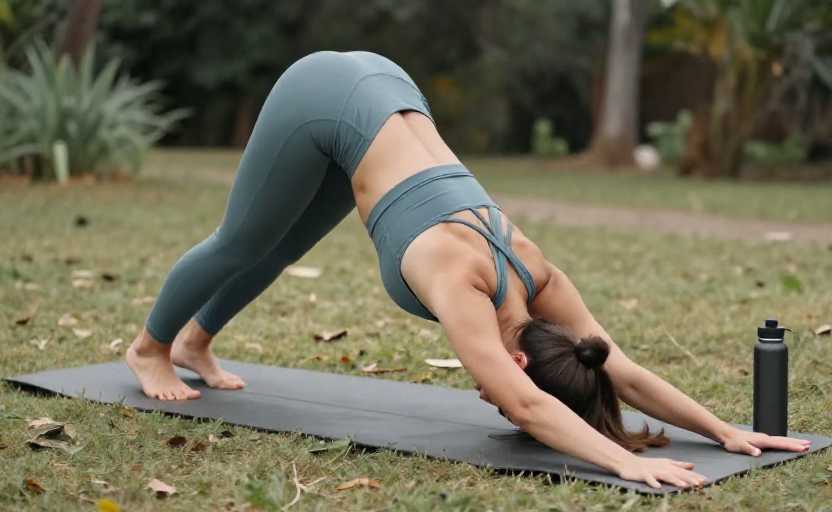
Preparation for classical dance : Five, single Shanbang.
action : The main leg is brought forward by rubbing the floor, the suction leg is retracted to the ankle joint, the toes are attached to the ankle joint, the hips are opened outwards, the knees are facing the side, and the hip joints are fixed. Then, with the knee joint as the relatively fixed point of the action, the calf quickly pops forward and touches the ground. This can be repeated many times. This action can be done at the 25 to 45 position or combined with the hooking of the foot, that is, when it pops up, it is a stretch of the foot, and when it is retracted, it is a hook of the foot. It should be noted that when changing from hooking the foot forward to stretching the foot, firstly, it must be stretched out from the arch of the foot to the toes, and secondly, it must feel like it is extending to the maximum distance.
The small elastic leg can be done in the forward, side, or backward directions. Except for the change in the position of the power leg adsorbed on the main leg when the power leg is retracted, for example, when the backward small elastic leg is retracted, the heel of the power leg is adsorbed on the back of the ankle joint. The rest of the movement requirements are the same.
Classical dance movement requirements:
(1) The position and running route of the feet are accurate, and the movements are fast, powerful and flexible.
(2) When doing continuous and rapid small leg bounces, you must overcome the error of performing the second action before the power leg is straightened.
General requirements for classical dance (four major elements)
1. Shape - appearance, various dance postures and corresponding technical skills based on twisting, tilting, rounding and curving, as well as the display of the momentum process;
2. God - the charm, demeanor and temperament of the nation (the connotation of classical dance);
3. Jin - Jintouer (inch Jin), the force method and rhythm characteristics of classical dance, contrasting methods such as priority, cadence, slow and fast, loose and tight, opening and closing (contrast method).
4. Rhythm - Rhythm and movement rules, plain, vertical circle, and figure-8 circle are the essence of the momentum of Chinese classical dance. Keeping the upper body and then walking up, or keeping the upper body and walking down are the movement rules of Chinese classical dance. If you want to go left before you go right, if you want to go up first, go down, and move around in a flash, these are the aesthetic requirements from appearance to interior.
Basic training and characteristics of classical dance
1. Appearance characteristics.
A. Twisted, tilted, rounded and curved except upright.
B. Take the trunk as the core.
C. Dance style.
2. Quality and ability.
A large degree of soft opening and comprehensive quality ability require a large range of rotation of the head, neck, shoulders, chest, waist, hips, upper limbs, and lower limbs, and also require strength.
3. Force method and movement awareness.
Take the waist as the axis, the hips as the base, and the feet as the roots.
4. Connection characteristics.
Flat circles, vertical circles, and figure-eight circles are the regular characteristics of all connecting movements. The figure-eight circle is an inevitable process in conversion, and sometimes it is partial in the application process. In aesthetics, it is an arc. Without the arc, there is no circle, and without the circle, there is no momentum. Without momentum, the movement changes will be stiff and unsmooth.
5. Rhythm characteristics.
Priorities, cadences.
The style, specifications and momentum characteristics of classical dance technical skills.
1. There is an inseparable relationship between the technique, momentum and body rhythm of turning.
2. The national character of the turning technique is reflected in the technical skills of the upper body in a tilted state. The highlight lies in the flash and dexterity in rhythm.
3. The formation of jumping skills and the method of exerting force have the characteristics of classical dance.
Disclaimer:
1. This article is sourced from the Internet. All content represents the author's personal views only and does not reflect the stance of this website. The author shall be solely responsible for the content.
2. Part of the content on this website is compiled from the Internet. This website shall not be liable for any civil disputes, administrative penalties, or other losses arising from improper reprinting or citation.
3. If there is any infringing content or inappropriate material, please contact us to remove it immediately. Contact us at: