
Geriatric fitness and rehabilitation therapist
A geriatric fitness and rehabilitation practitioner is not a "fitness coach who leads the elderly in aerobics", nor is it a relegated position in the rehabilitation department of a hospital. The core is a professional role at the intersection of sports fitness, clinical rehabilitation, and elderly care. The core goal is to help people over 60 years old improve body functions, reduce pain, and improve the quality of daily life through scientific exercise within safe boundaries. This is the most practical definition that I have worked in this industry for 7 years and have touched nearly a thousand exercise files of the elderly.
Aunt Zhang, 68, who was just picked up last week, suffered a grade-two injury to the meniscus of her right knee after three years of square dancing. The orthopedic doctor gave her two options: either replace the joint, or go home to rest and walk less. She didn’t want to have an operation, and she couldn’t bear to sit at home every day. When her children came over, I gave her an evaluation first. Her quadriceps muscle strength was only level 3, and she was in pain when her knees were bent to 80 degrees, making her sweat.
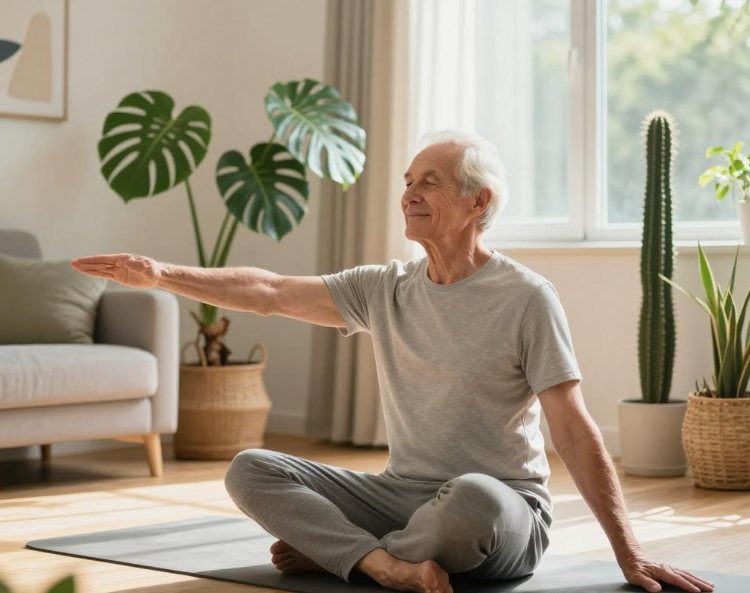
Speaking of which, there is still no unified standard answer in the industry for exercise intervention for knee joint injuries in middle-aged and elderly people. When I first entered the industry, I followed a rehabilitation therapist from a tertiary hospital. I followed the path of precise assessment: muscle strength, joint mobility, and MRI were taken to see the location of the injury. All training movements had to be at an angle and calculated as a proportion of force. All I practiced were "standardized movements" such as closed-chain silent squats and seated leg flexion and extension. Until later, I met Uncle Li, a 72-year-old stroke patient. After practicing this method for two weeks, he said that counting reps on a table every day was too tiring and he stopped doing anything. Later, he found a geriatric rehabilitation practitioner who specialized in traditional health care. He practiced the adapted and simplified Ba Duan Jin, slowly honing the most basic movements such as raising his hands and turning his waist. Half a year later, his left arm, which could not be lifted before, could hold a cup and drink water by himself. Now he can still go downstairs and walk for 20 minutes every day.
When I attended industry forums later, I often saw the two factions quarreling with each other: the Western medicine rehabilitation school with a background in training said that traditional exercises have no quantitative standards, and incorrect exertion can lead to injuries; an old-school master who does community elderly sports said that many elderly people are reluctant to pay more than 100 yuan for muscle strength evaluation. If you tell them about the proportion of force exertion, they will not understand. The first thing is to be willing to follow the practice. I stand in the middle. It is of course safer to get the medical imaging report and complete a full set of assessments. If you really encounter an elderly person who is reluctant to spend money or does not understand the professional terminology, it is better to slow down and find movements that he can accept first, rather than just letting him go home to "recuperate."
Don’t think that our profession is to help the elderly stretch their arms and legs every day. In many cases, judging whether it can be practiced and how intense it should be is much more important than what movements to choose. Last year, a 76-year-old Uncle Wang came to see me. He was a middle school physical education teacher before retiring. Apart from mild osteoporosis, he had nothing wrong with him. However, he recently felt weak in his legs while carrying rice upstairs. I added light weight dumbbell chest press and step training to him, and practiced three times a week. After two months, he could carry 20 kilograms of rice up to the third floor without breathing. But the 62-year-old Aunt Liu who came here last month rarely even leaves the house and staggers when standing. The first training goal I set for her is to be able to raise her heels 20 times in a row while sitting, and to stand steady on one foot for 10 seconds. She will not be allowed to practice more. Some people in the industry also criticize me, saying that providing resistance training to the elderly is nonsense. Who will be responsible if they fall? But if you look up the "Guidelines for the Prevention and Control of Sarcopenia in the Elderly in China," it is clearly stated that appropriate resistance training is the most effective way to delay muscle loss. The core is that you have to know the background of each elderly person: you must know your past medical history, your usual exercise habits, and your inner expectations. If any of them are missing, problems will easily arise.
Nowadays, many people confuse us with elderly fitness instructors. I am actually quite helpless. Not long ago, my aunt received a meniscus injury. At the gym at the entrance of the community, she was forced to do squat jumps by an "elderly fitness instructor" who had been trained for two weeks. The pain was so painful that she couldn't stand up. Some people think that we must have hospital qualifications, but this is not entirely true: hospital rehabilitation therapists deal more with post-operative and pathological acute-phase problems, while we do more with extended post-hospital functional recovery, as well as maintenance of daily functions for healthy elderly people - for example, many elderly people are not sick or in pain, but struggle to tie their shoelaces when they squat down, have shoulder pain when reaching for things on the cabinet, or feel tired after taking two steps with their grandson. These are the scope of our services, and we do not have to wait until they are sick to come.
After working in this business for a long time, the most fulfilling thing has never been the number of banners received. It is that Aunt Zhang’s knees no longer hurt. Last time she came to class, she stuffed me with a can of her own pickled sugar garlic; Uncle Li can now go downstairs to buy cigarettes by himself, and every time he passes by my studio, he comes in and throws a mint candy to me; Uncle Wang sent me a video of him climbing Xiangshan Mountain last week, standing on the top of the mountain waving his arms to the camera, smiling like a child.
To be honest, how can there be any unified "elderly rehabilitation standards"? As long as the elderly can come and go safely, they can buy groceries, take care of their children, and dance square dances without any hassle, which is more effective than any professional evaluation report or international certification.
Disclaimer:
1. This article is sourced from the Internet. All content represents the author's personal views only and does not reflect the stance of this website. The author shall be solely responsible for the content.
2. Part of the content on this website is compiled from the Internet. This website shall not be liable for any civil disputes, administrative penalties, or other losses arising from improper reprinting or citation.
3. If there is any infringing content or inappropriate material, please contact us to remove it immediately. Contact us at: