Diet taboos during confinement
Your own eating habits, physical recovery status, and your baby's reaction during breastfeeding.
A while ago, a mother who just gave birth to a baby came to me to complain. She said that her mother-in-law would not even let her touch apples. She said that the cold hurt her stomach and would cause postpartum syndrome. She had been eating fruit every day before she was pregnant, but she had not touched vegetables and fruits this week. She was so constipated that she had to squat on the toilet and had a side incision that hurt, and she shed tears. This made me angry and funny.
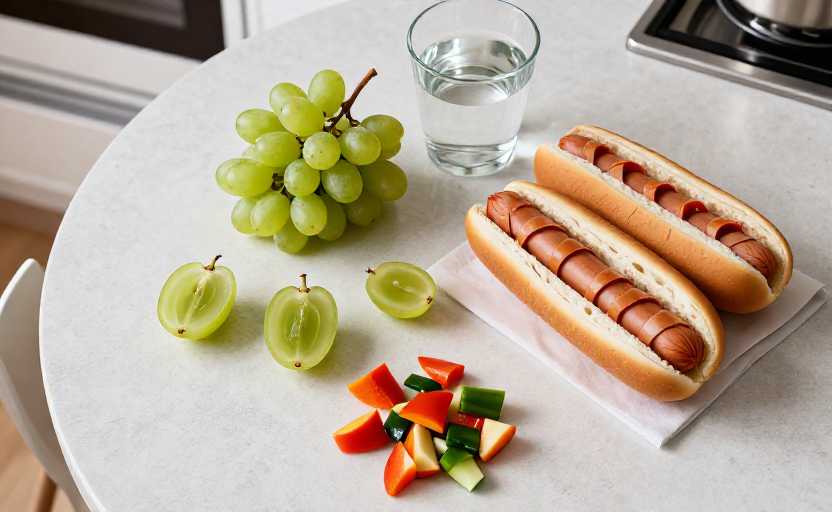
In fact, the saying "you can't eat raw or cold foods" really made sense a few decades ago. At that time, there was no clean tap water, and the cleaning conditions for fruits and vegetables were poor. Raw and cold foods were easily contaminated with bacteria and parasites. In addition, there was no heating in winter, and the fruits just fished out of the wells were freezing cold. I was weak after giving birth, and eating them was indeed easy to get upset. The rules passed down by the older generations were actually the survival wisdom of those days. But it’s different now. Fruits purchased through regular channels are washed and kept at room temperature, or soaked in warm water for two minutes. Eaten, they are warm and sweet. They can not only supplement vitamins but also supplement dietary fiber. The effect of preventing constipation is much more effective than drinking ten bowls of greasy milk soup. How can it be said to be harmful to the body?
As for the question that many people are arguing about, "Can you eat spicy food during confinement?", there is no standard answer. I know a mother from Chongqing. She ate hot pot every three days when she was pregnant. She ate spicy noodles the day after she was discharged from the hospital. The wound didn’t hurt, the baby didn’t develop eczema, and her milk supply was pretty good. ; But there is also a mother who doesn’t usually eat spicy food. After giving birth, she was craving for two bites of Zhou Hei Ya. As a result, she developed oral ulcers and her baby’s buttocks remained red for two days. She should definitely avoid this situation for the time being. To put it bluntly, if you don’t feel uncomfortable after eating it and your baby is not abnormal, then you can eat it. There is no need to ruin your mouth for unwarranted taboos.
Many people also asked if they could drink coffee or milk tea? According to the conclusion of evidence-based medicine, daily caffeine intake of no more than 200mg (about the amount of a medium cup of American milk tea, or two cups of ordinary milk tea) is completely safe and will not affect the baby. Of course, you should also pay attention to observation. If you find that your baby is extremely excited and can't sleep for a long time after drinking it, then reduce the dosage or switch to decaf. If the baby has no reaction, you can drink a cup occasionally to relieve tiredness. You really don't have to feel guilty. It is much better than holding back your bad mood.
Of course, not everything can be eaten openly. There are a few things that must be avoided absolutely and there is no room for negotiation. First of all, don’t touch any food containing alcohol. It’s all rumors that rice wine, glutinous rice wine, and confinement wine can produce breast milk. Alcohol will enter breast milk through the blood-milk barrier and affect the baby’s neurological development. Even if it is cooked, there will be some residue. Then there are half-cooked foods, such as soft-boiled eggs, sashimi, and half-cooked barbecue. The mother's immunity is lower than usual. If she is infected with parasites or bacteria, she will be the one to suffer, and it may also affect breastfeeding. Also, if you have a clear history of food allergies, or your baby has been diagnosed with a certain type of food allergy, such as milk protein allergy, then you must strictly avoid the corresponding food. This is not negotiable.
I have been doing maternal and infant nutrition consultation for so many years, and I have seen too many mothers who are bound by various strange taboos. They cannot eat too much salt (in fact, normal salt is fine, as long as you don’t eat too salty pickled products), and you cannot eat leeks for breast milk (actually, as long as you usually I didn’t feel less milk after eating it, and I can eat it completely. What really affects the milk supply is drinking less water, not getting enough rest, and not feeding frequently enough). I can’t even eat watermelon. In the summer, my mother is covered in sweat and I won’t even touch the watermelon, which is cold in the mouth. It’s really unnecessary.
To put it bluntly, the core of postpartum diet has never been "taboos", but "appropriate" - what is suitable for you, what you feel comfortable eating, can keep you up with nutrition and be in a good mood, is the best. There are so many black and white rules. After all, you are the one undergoing confinement. Only you know whether it is comfortable or not, right?
Disclaimer:
1. This article is sourced from the Internet. All content represents the author's personal views only and does not reflect the stance of this website. The author shall be solely responsible for the content.
2. Part of the content on this website is compiled from the Internet. This website shall not be liable for any civil disputes, administrative penalties, or other losses arising from improper reprinting or citation.
3. If there is any infringing content or inappropriate material, please contact us to remove it immediately. Contact us at: